
A1C tracker
A1C tracker for manual HbA1c records
Glytrio lets users keep A1C / HbA1c lab results as manually entered clinical facts near the diabetes diary. It stores the record for review and reports, but does not calculate A1C from glucose readings or interpret treatment.
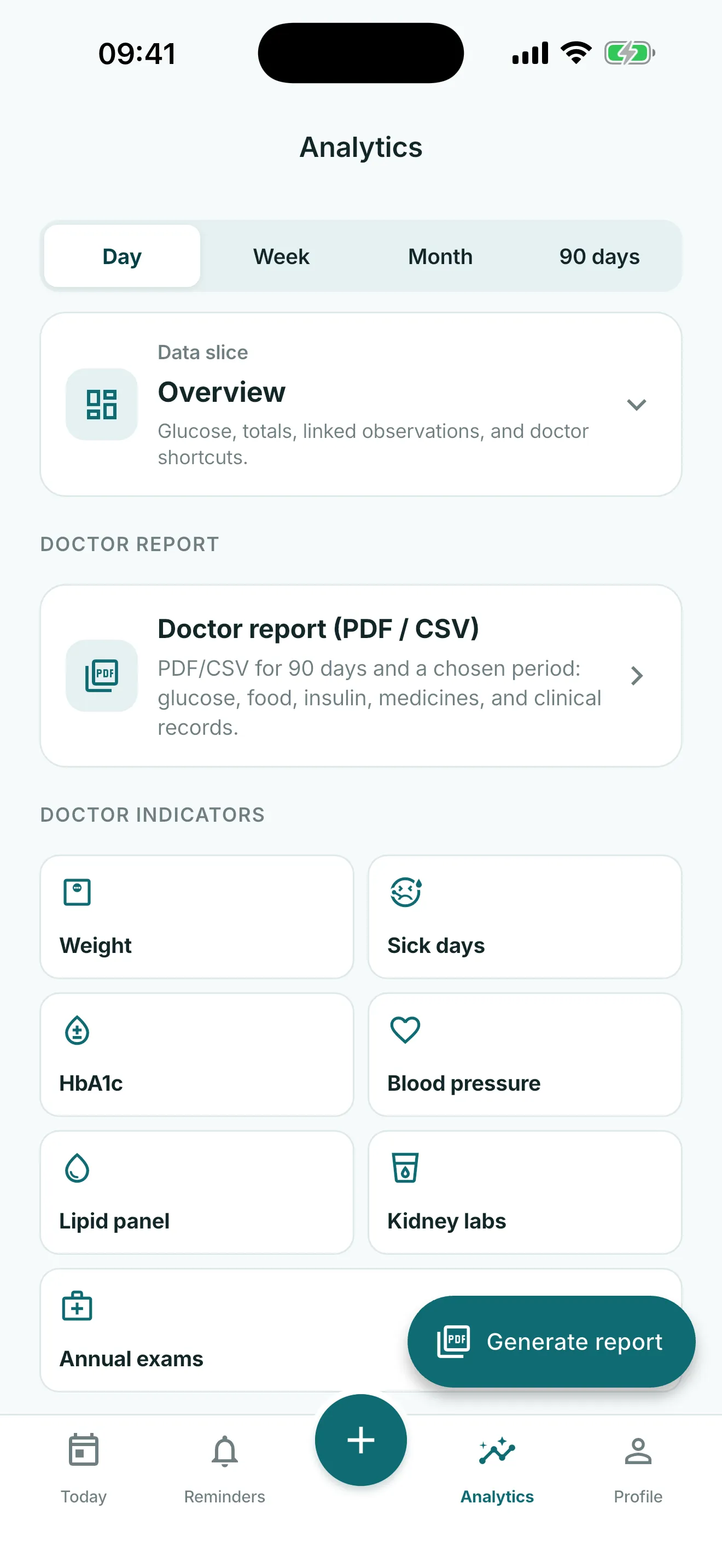
A1C belongs with the diary, but stays factual
HbA1c is usually a lab result, not a daily reading. Glytrio keeps it as a clinical fact entered by the user, alongside blood pressure, lipids, kidney labs and annual exam notes.
The app can include those facts in doctor reports so they are not separated from the daily glucose history.
- manual A1C / HbA1c records
- date and clinical-fact context
- near glucose, food and medication history
- included in doctor-report exports
No A1C calculation or diagnosis
Glytrio does not estimate A1C from glucose readings, diagnose control or recommend treatment changes. It records the lab value the user enters and keeps it available for review.
Useful before appointments
Keeping recent A1C values near daily diary records can make appointment preparation easier, especially when paired with PDF/CSV exports for an available date range.
Questions
Common questions
Does Glytrio calculate A1C from glucose readings?
No. Glytrio stores manually entered A1C / HbA1c lab results. It does not calculate or estimate A1C.
Can A1C appear in a doctor report?
Yes. Clinical facts entered by the user can be included in doctor-report context.
Does Glytrio interpret my A1C result?
No. Glytrio records the value and does not diagnose, score or recommend therapy changes.